Rijnmond Distribution Group operates nine cross-dock warehouses south of the Botlek, 164,000 m² of roof above a floor that has not been dark since 2011. Trucks arrive on a twenty-minute cadence around the clock and the picking mezzanines run three shifts. Any roof work that closed a dock apron, dropped power to a conveyor line, or put a crane over a truck lane would cost more per hour than the array would earn in a week. The board approved the project on one condition: no scheduled downtime, no shift moved, and no dock door out of service longer than a single trailer turnaround.
The roofs made that harder than it sounds. Six of the nine were built between 2008 and 2012 on trapezoidal steel deck with 60 mm PIR insulation and, after a snow-load reassessment under NEN-EN 1991-1-3, carried under 15 kg/m² of spare capacity — enough for a ballasted system only if the ballast was calculated bay by bay rather than averaged across a hall. The insurer's fire conditions ruled out roof penetrations and any DC run crossing a sprinkler zone without fixed separation. Stedin's connection offer capped export at 3.6 MW on a feeder already at its limit, so the plant had to be sized for self-consumption first and export second.
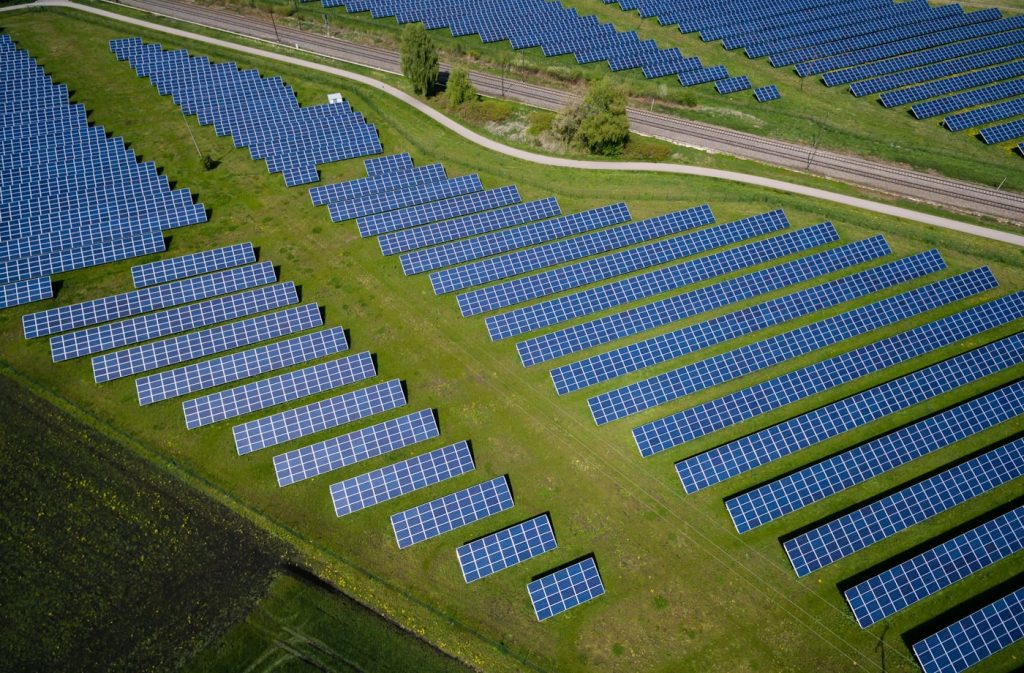
8,736 glass–glass modules at 550 Wp sit on Esdec FlatFix Fusion east–west frames, pitched at 10° and ballasted to a per-bay schedule that held added dead load between 9 and 13 kg/m², checked against the as-built purlin drawings for each hall rather than a single roof average. Forty Huawei SUN2000-100KTL-M2 string inverters are mounted under the canopies at the gable ends, out of the weather and reachable without a roof permit. Each hall feeds its own 630 kVA transformer into the existing 10 kV ring, where an export limiter reading the refrigeration and charger loads keeps the plant inside the 3.6 MW connection.
The schedule was won on the ground, not on the roof. Modules, frames and ballast were pre-kitted into 42-module pallets at a hall on the Merwehaven quay and delivered to a fenced lay-down set back from the dock aprons, then lifted at the gable ends by two rack-and-pinion material hoists — no crane ever swung over a truck lane. Crews reached the roofs by external stair towers and were never inside the building. The nine medium-voltage tie-ins were the only real interruptions: pre-terminated cable and a temporary bypass brought each switchover under 40 minutes, all of them inside Sunday maintenance windows the site already held.
Measured over the first twelve months of operation.
Daytime demand met without drawing from the grid.
No shift moved, no dock door out of service.
Nine roofs, first pallet to energisation.

I told them the day a truck waits at a dock because of a solar panel is the day we stop. What I did not expect was arguing for three weeks about where to park the ballast pallets.
Choose a demo, import it in minutes, and customize it to fit your brand.