Baltijos Vėjo Parkai held something scarcer than land: a 110 kV connection agreement at Klaipėda with 30 MW of firm export, granted years earlier and close to lapsing. A conventional six-turbine wind farm would have used that connection for roughly 2,500 full-load hours a year and left it idle the rest — an expensive way to hold a permit that Litgrid's queue would take another five years to replace. The board wanted a second technology on the same wires rather than a second application. Nobody in the Baltics had built that, and the connection agreement said nothing about what happens when two generators share one metering point.
The difficulty was never the equipment. Lithuanian grid code treats a generating unit as one technology carrying one set of fault-ride-through and reactive power obligations, so a co-located park has to answer as a single machine while two dissimilar assets swing independently underneath it. Wind here peaks between October and February and solar between April and August, so the overlap is narrow — but the hours that do overlap are exactly the hours the 30 MW ceiling bites, and every kilowatt-hour spilled there is money. The site adds its own problems: 4 km from the Curonian Lagoon on sand, water table at 1.4 m, chloride-laden air that eats ordinary galvanising.
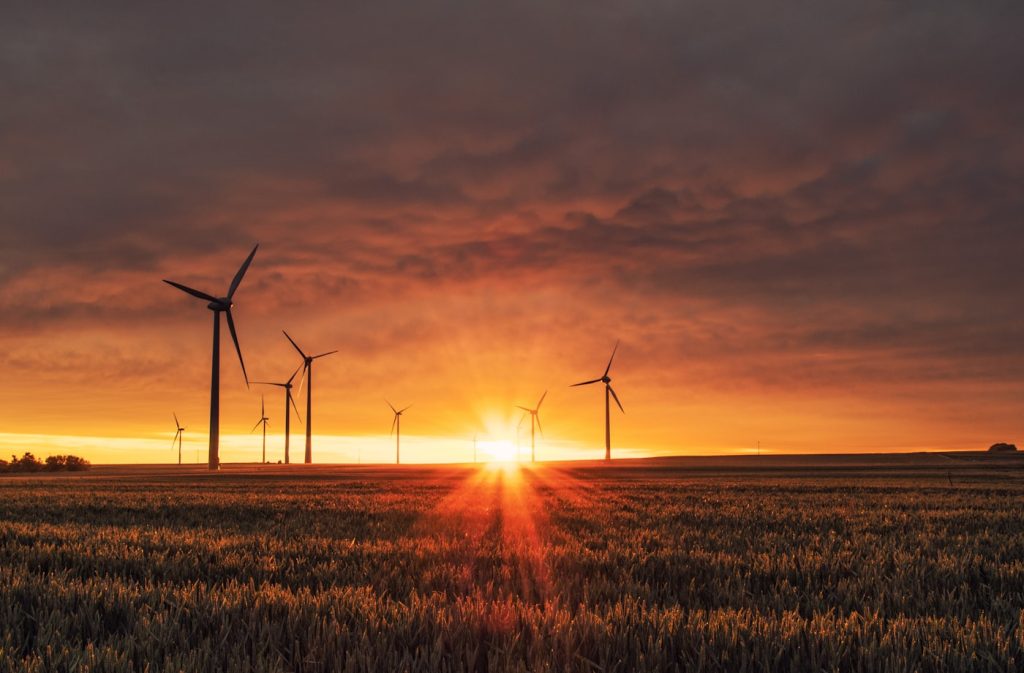
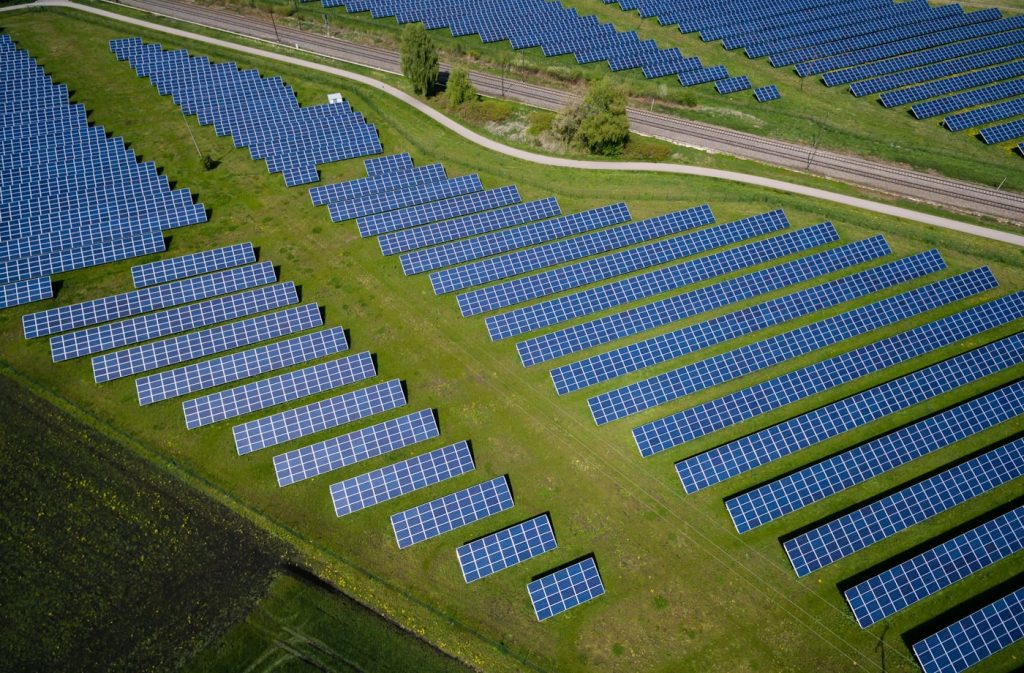
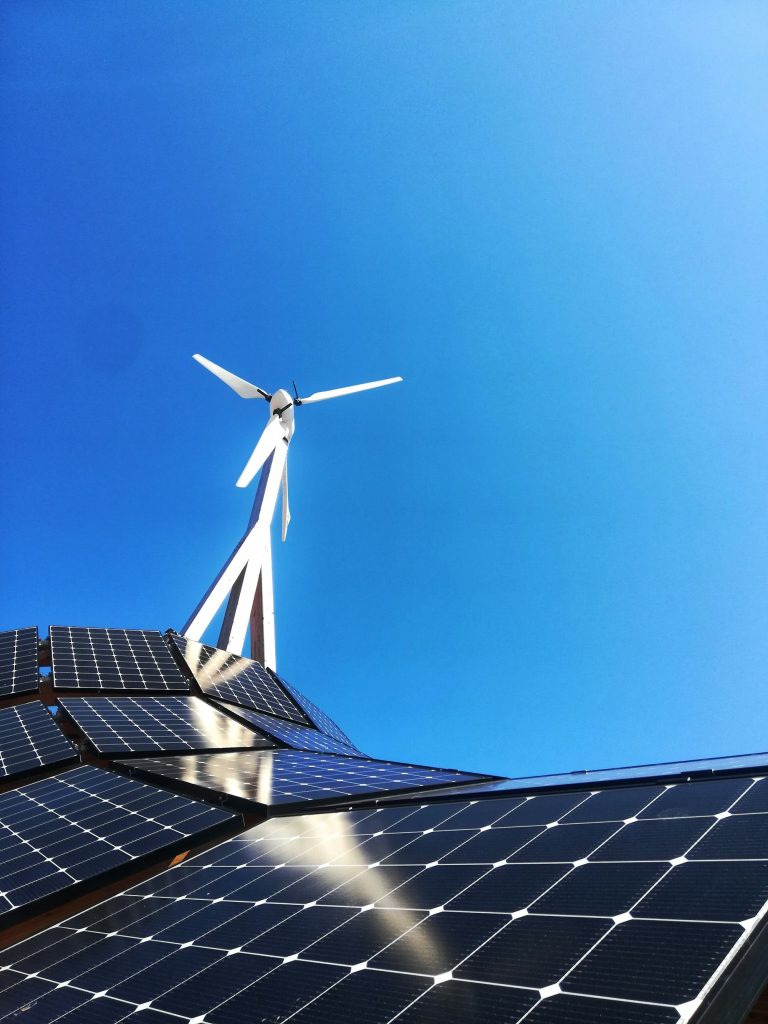
Six Vestas V150-4.2 MW turbines on 125 m hub heights, 25.2 MW in total, set along the field boundaries where the fetch off the Baltic is cleanest. Between and around them sit 34,200 bifacial modules on fixed 35° tables — 18.8 MW DC through 43 Sungrow SG350HX string inverters, carried on Zn-Al-Mg coated piles driven to 3.2 m instead of the hot-dip galvanised sections specified at tender. Both assets land on a single 40 MVA transformer at a shared 110 kV substation. Installed capacity is 44 MW behind a 30 MW gate, oversubscribed by 47 per cent on the arithmetic that the two resources are almost never at full output together.
The ceiling is held by one plant controller that keeps the point of connection at or below 30 MW on a 200 ms loop, taking wind first and trimming the solar inverters in 1 per cent steps — an inverter answers a curtailment order in under two seconds, a turbine does not. Litgrid registered the park as a single generating unit after eight weeks of witnessed fault-ride-through and reactive capability testing at the substation, the first such registration in the Baltics. Modelled spill against the cap was 2.4 per cent and the first operating year came in at 2.1. Combined capacity factor runs 34 per cent above what either technology reaches alone on this site.
First-year output against 89 GWh modelled.
Over either technology built on its own.
Curtailment against the 30 MW export cap.
Against the Baltic grid emissions factor.
We spent fourteen months arguing with Litgrid about what a single point of connection actually means before anyone poured a foundation — the paperwork was harder than the winter, and I would not have believed that beforehand.
Choose a demo, import it in minutes, and customize it to fit your brand.